01 / TENSIONThe problem
Network deployment took days. It should take minutes.
MY ROLESole Product Designer. Conducted user research, facilitated brainstorming workshops, created wireframes and hi-fi prototypes, validated with customers.
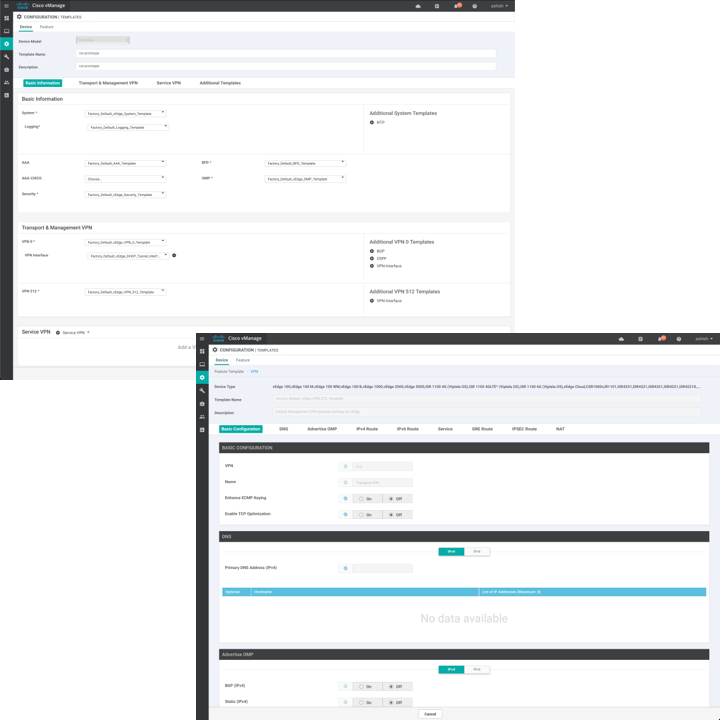
Cisco provides network deployment through its traditional platform, Cisco vManage. Feature-rich but verbose and complex, network administrators were drowning in configuration forms. Experts and novices alike struggled with the same problem: too many fields, too little guidance, too much risk.
If I start filling the form and ask you to get coffee, you can grind the beans, brew a pour-over, add sugar and milk, and bring it back in a cup. I would still be filling the same form.
Contextual inquiry participant, Cisco SD-WAN
14.5
Minutes average
To complete one SD-WAN config form
38.2
Clicks per form
Across 12 research participants
3-4
Days to deploy
From config to running network
5
Weeks total
Our entire project timeline
02 / RESEARCHUnderstanding users
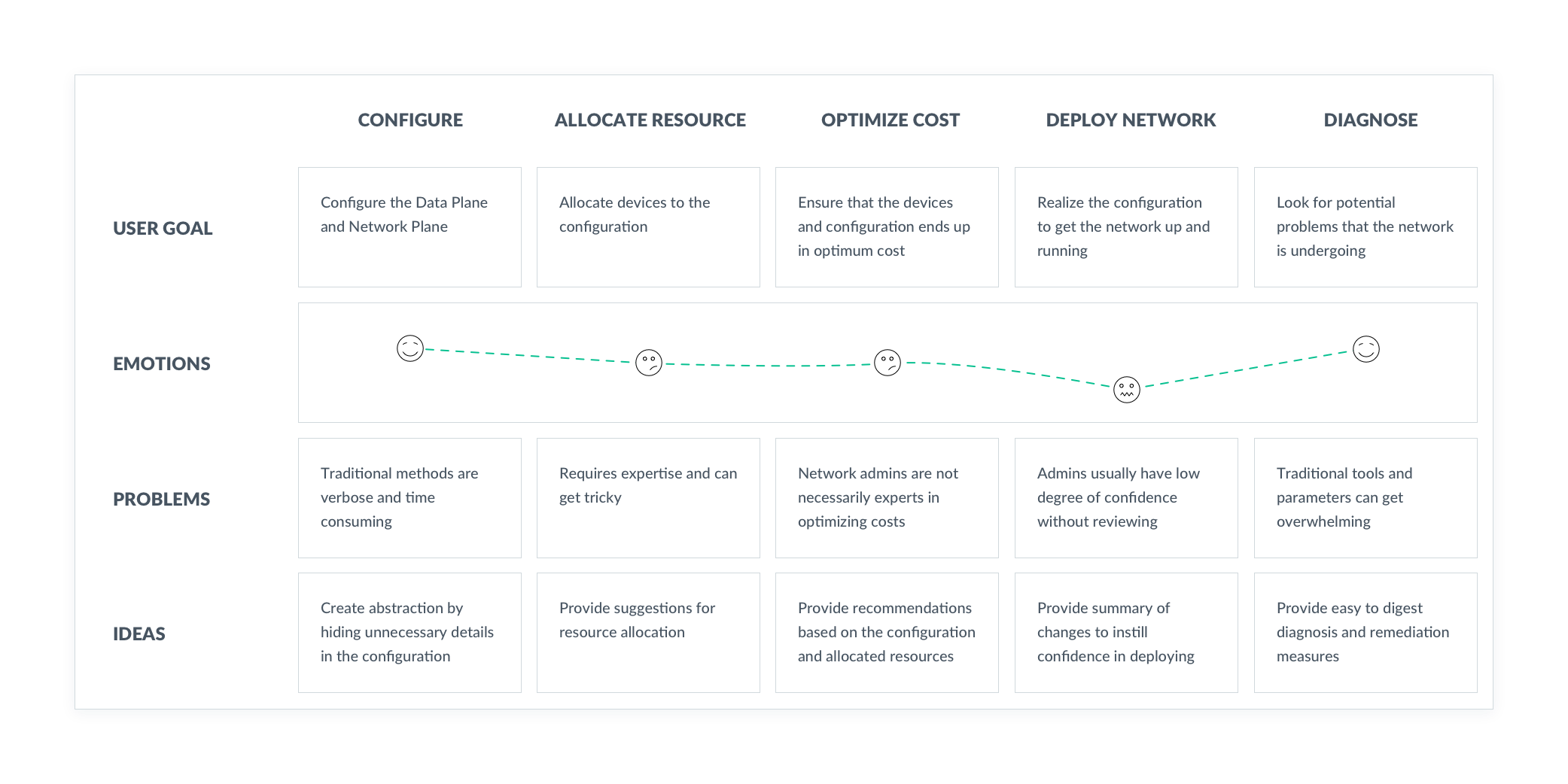
One week. Twelve participants. Six insights that shaped everything.
MY ROLELed contextual inquiry sessions, brainstorming, customer journey mapping, user flows, and affinity diagramming.
01
Abstraction is desired
Admins want a simplified interface, even though they know the intricate details underneath.
02
Cost vs. performance split
Engineers focus on network performance. Administrators and managers focus on cost optimization. Different users, different priorities.
03
Low confidence in deployment
Admins won't deploy without a review cycle. Confidence requires visibility into what will change.
04
Too many bells and whistles
The traditional platform exposes far more configuration attributes than needed for 80% of use cases.
05
Siloed diagnostic tools
Individual tools work fine, but understanding the big picture is nearly impossible since nothing is correlated.
06
Trust in recommendations
Users will trust system-provided recommendations to a degree, but they need metrics and rationale to act on them.
03 / IDEATEWorkshops + synthesis
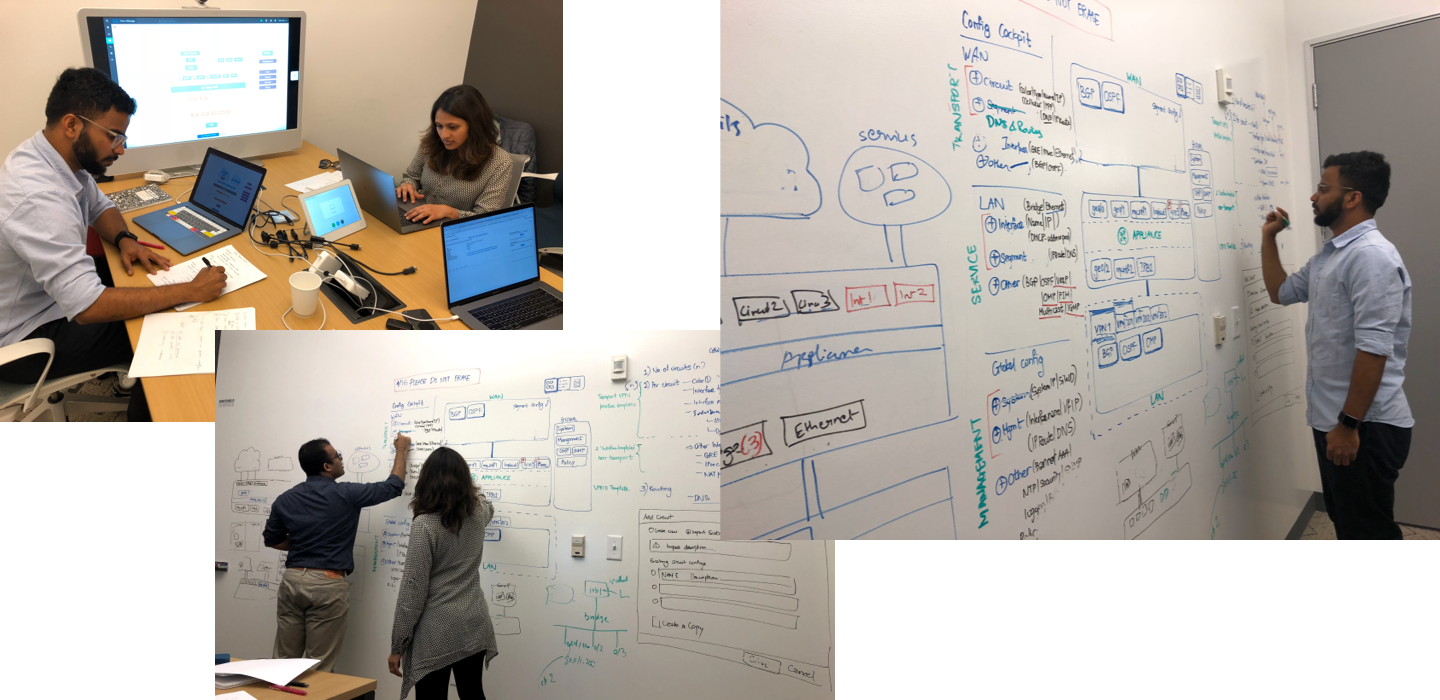
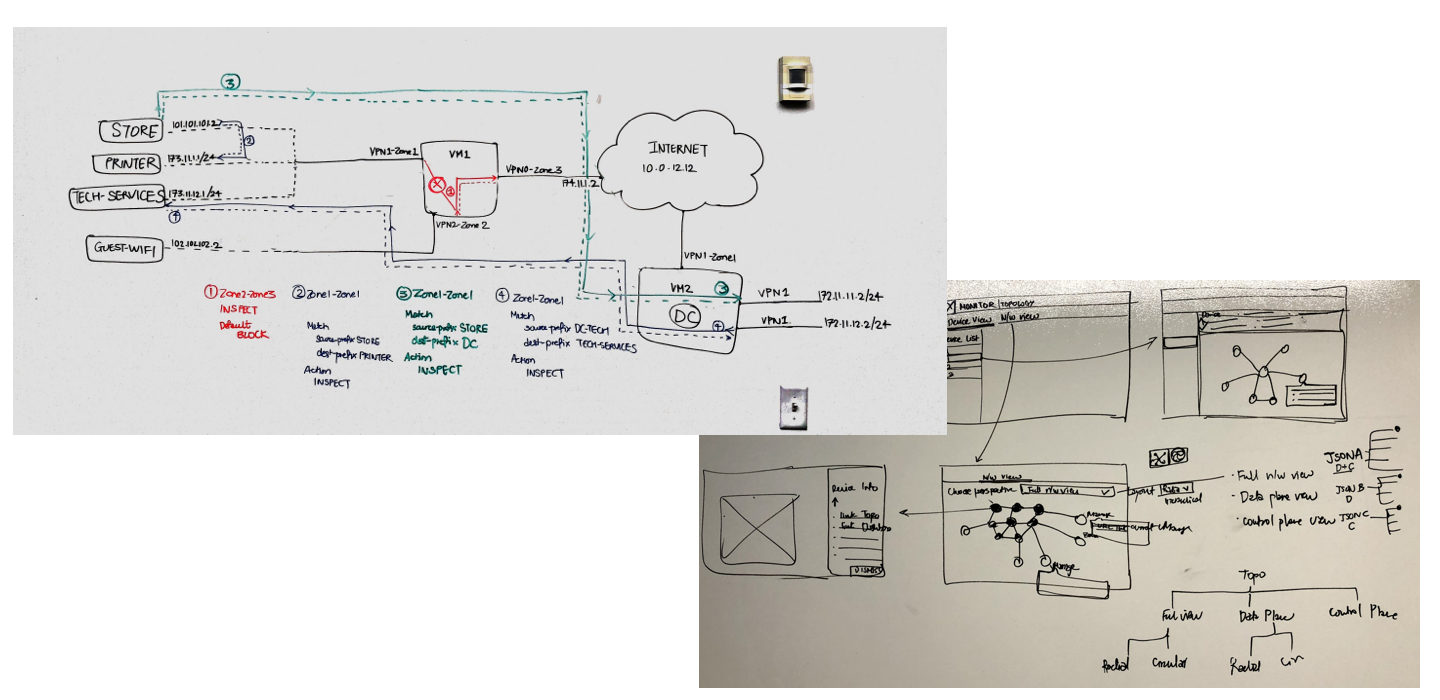
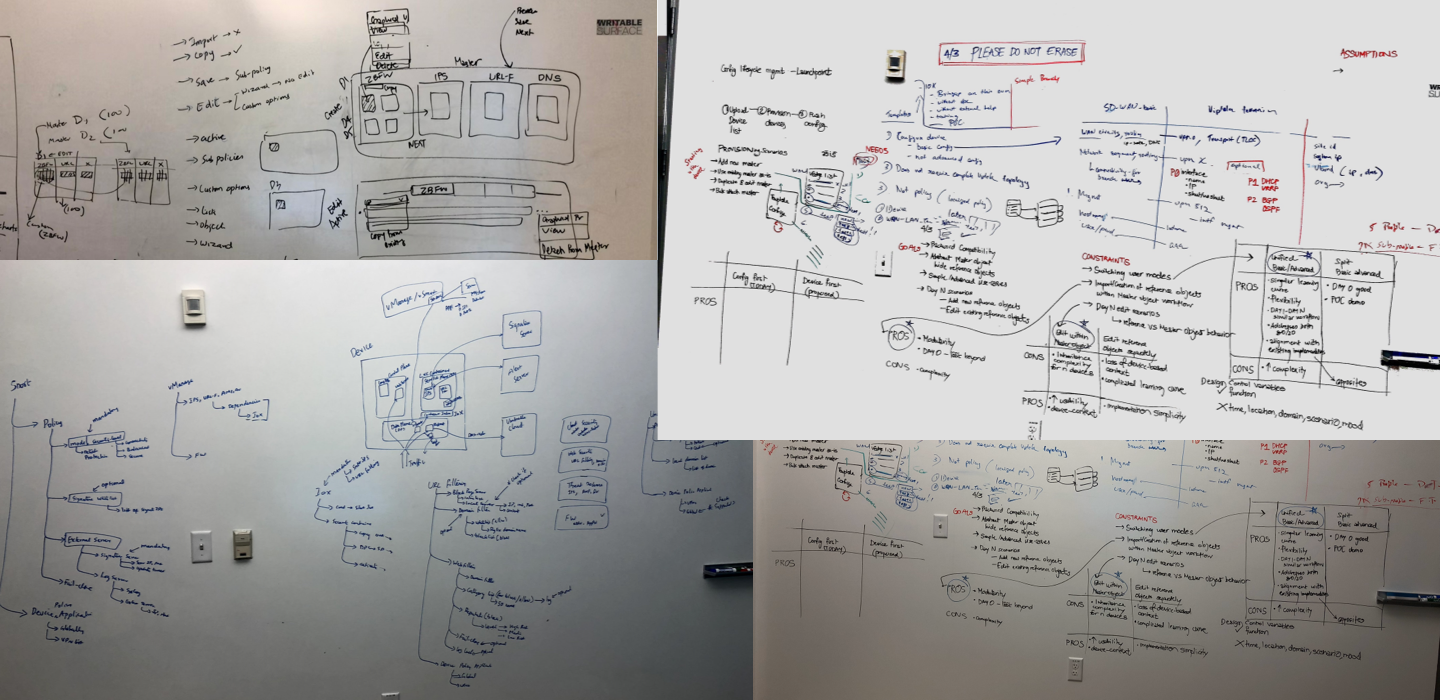
One and a half weeks of whiteboarding, sketching, and arguing productively.
MY ROLEFacilitated brainstorming workshops with PM and engineering. Led affinity diagramming and rapid prototyping to converge on the core concept.
We synthesized research into a core insight: the entire scope of user inputs could be abstracted into just three stages: Control Plane, Data Plane, and LAN, without losing any necessary configuration information.
01
3-stage abstraction
Control Plane, Data Plane, LAN. The entire config scope reduced without losing necessary information.
02
Categorized recommendations
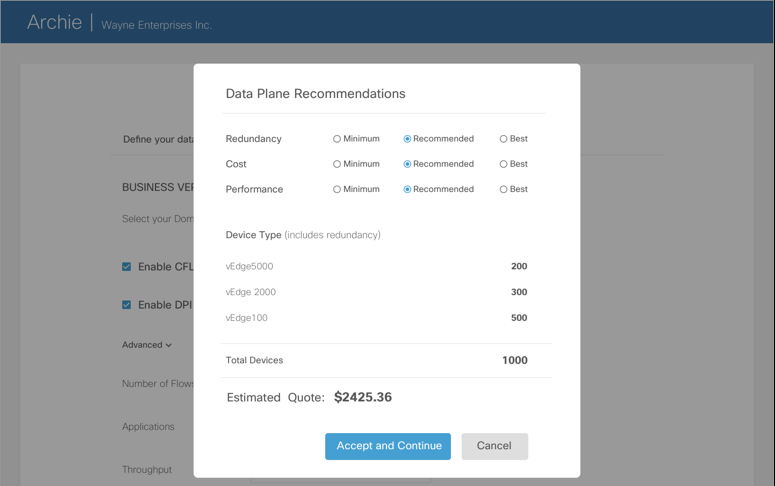
Recommendations for Control and Data Plane categorized by redundancy, cost, and performance, the 3 attributes users value most.
03
OSI-aligned diagnostics
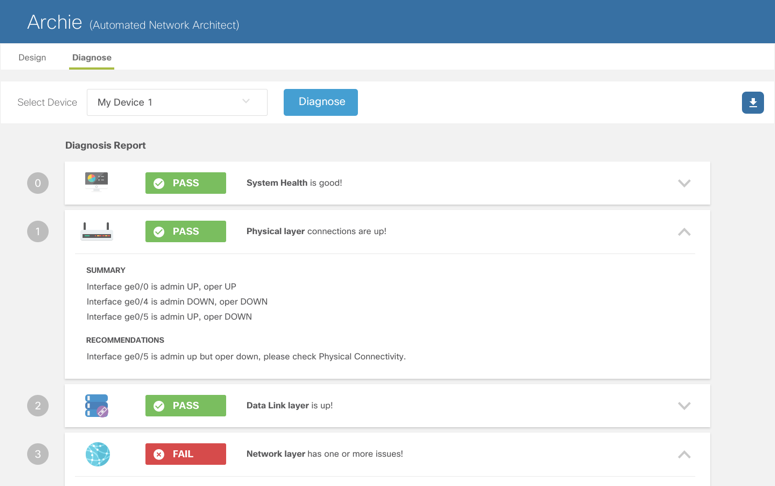
Diagnostic tools aligned with the OSI model, breaking diagnosis into 7 high-level steps every network user understands.
04
Duplicate + scale
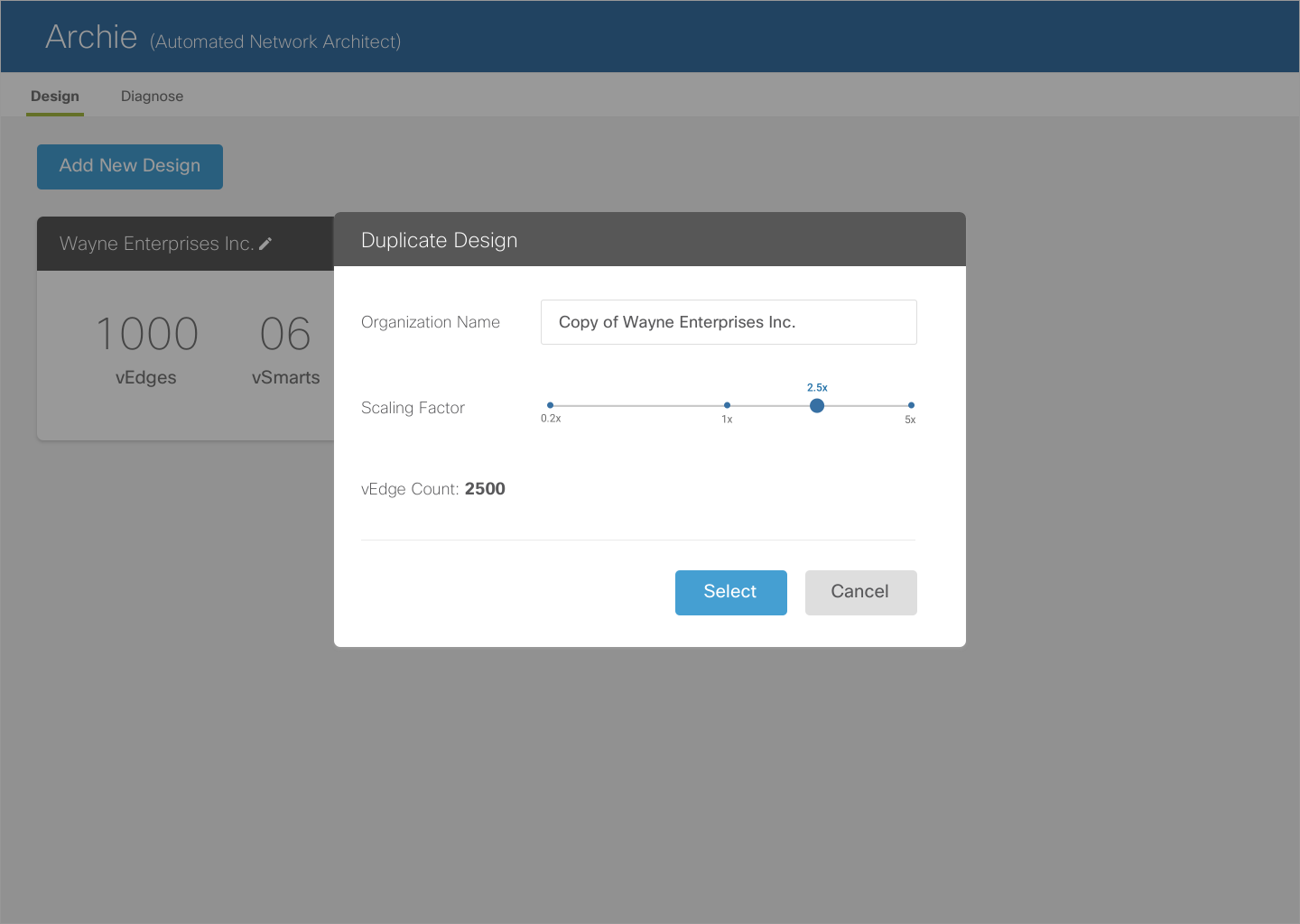
Duplicate an existing network design with a scaling factor. Saves enormous time for users creating multiple networks.
04 / CONSTRAINTSDesign challenges
Five constraints that shaped every decision.
01
Speed
Bring down total time from config to deployment with fewer inputs and clicks.
02
Clarity
Form organization must maintain continuity and context without losing information.
03
Abstraction
Hide technical complexity of the existing platform without missing agreed-upon functions.
04
Trust
Recommendations need metrics so decision-making feels smooth, not blind.
05
Function
Include all agreed-upon functions without increasing mental load. Progressive disclosure over everything.
PRINCIPLE 01
Clarity
Ensure relationships between elements are clear, providing continuity and context without losing necessary information.
PRINCIPLE 02
Digestible
A 3-step process that divides the entire data dump into sizable chunks which are easier to digest.
PRINCIPLE 03
Data-driven
Maintain a data-driven experience, keeping stakeholder opinions in check with a user-centered goal.
05 / CRAFTPaper to pixels
Three paper iterations, then straight to hi-fi. No time for wireframes.
MY ROLECreated 3 iterations of paper mockups, tested each with workshop stakeholders, then jumped to visual design using Cisco UI library + custom components in Sketch.
With only 1.5 weeks for design, we made a deliberate call to skip wireframes. Paper mockups were detailed enough to depict navigation flow, and stakeholder feedback was fast. Each iteration was tested, revised, and re-tested before moving to pixels.
3 iterations of paper mockups, each tested with stakeholders
06 / SOLUTIONThe Archie interface
Three steps. Each editable. Each explainable.
MY ROLEDesigned every flow, every recommendation modal, every diagnostic report. Partnered with engineering on the sizing algorithm UX.
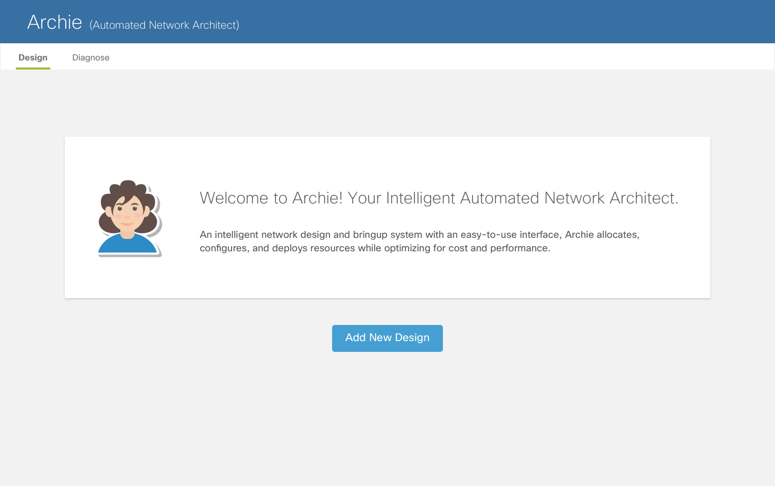
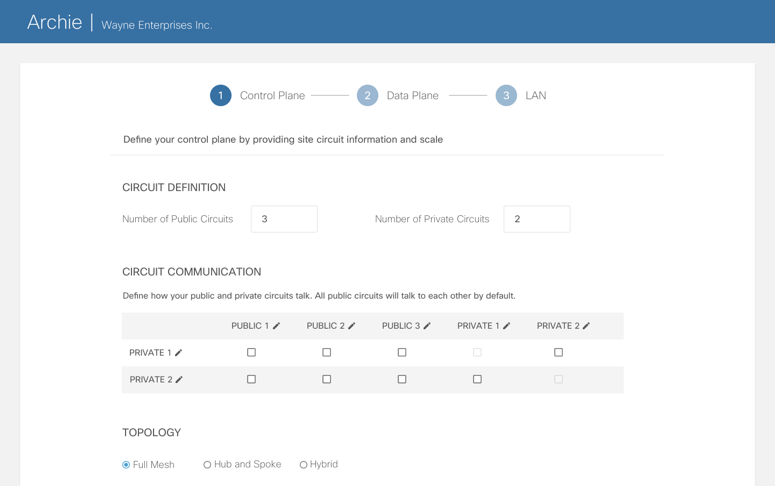
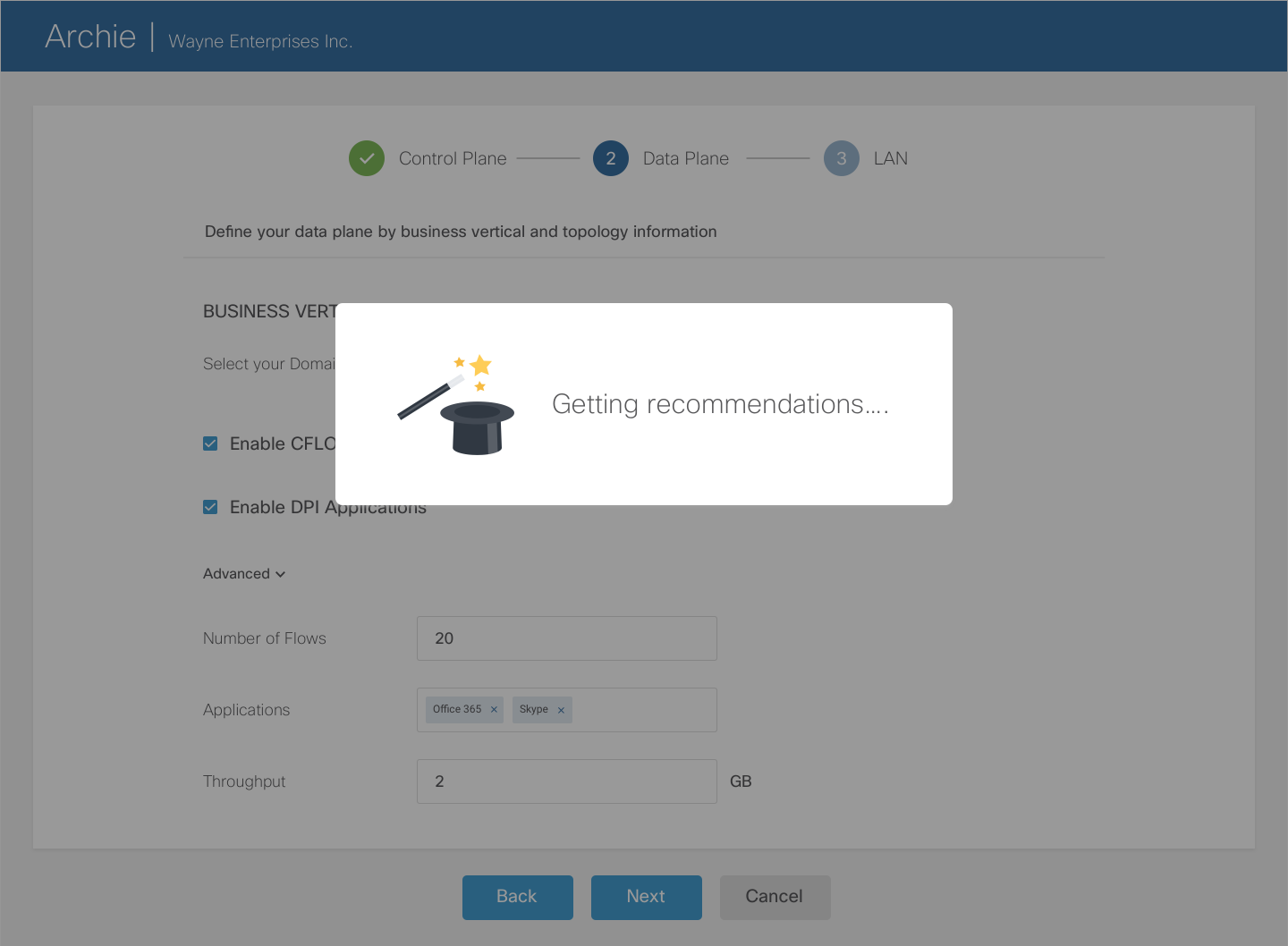
Archie abstracted the entire network configuration into three wizard steps: Control Plane, Data Plane, and LAN. Intelligent recommendations categorized by redundancy, cost, and performance gave users the confidence to act. And a diagnosis tool aligned to the OSI model made troubleshooting intuitive.
Diagnose: OSI-aligned report
Scale: Duplicate + factor
07 / VALIDATETesting in the real world
From prototype to running application to customer hands.
MY ROLEConducted 2 focus groups with 4 participants each using the running prototype. Synthesized feedback and iterated on finer improvements.
After 4 weeks of research, ideation, and design, developers took 3 weeks to build a running prototype on simulated scaled networks. The QA team built test environments. Then I put it in front of real users.
2
Focus groups
Conducted with the running prototype
8
Participants
Network admins and engineers
6
Proof of concepts
Deployed with Cisco customers
2K+
Deployed sites
Across customer PoC environments
08 / IMPACTWhat shipped
3-4 days down to 40-50 minutes.
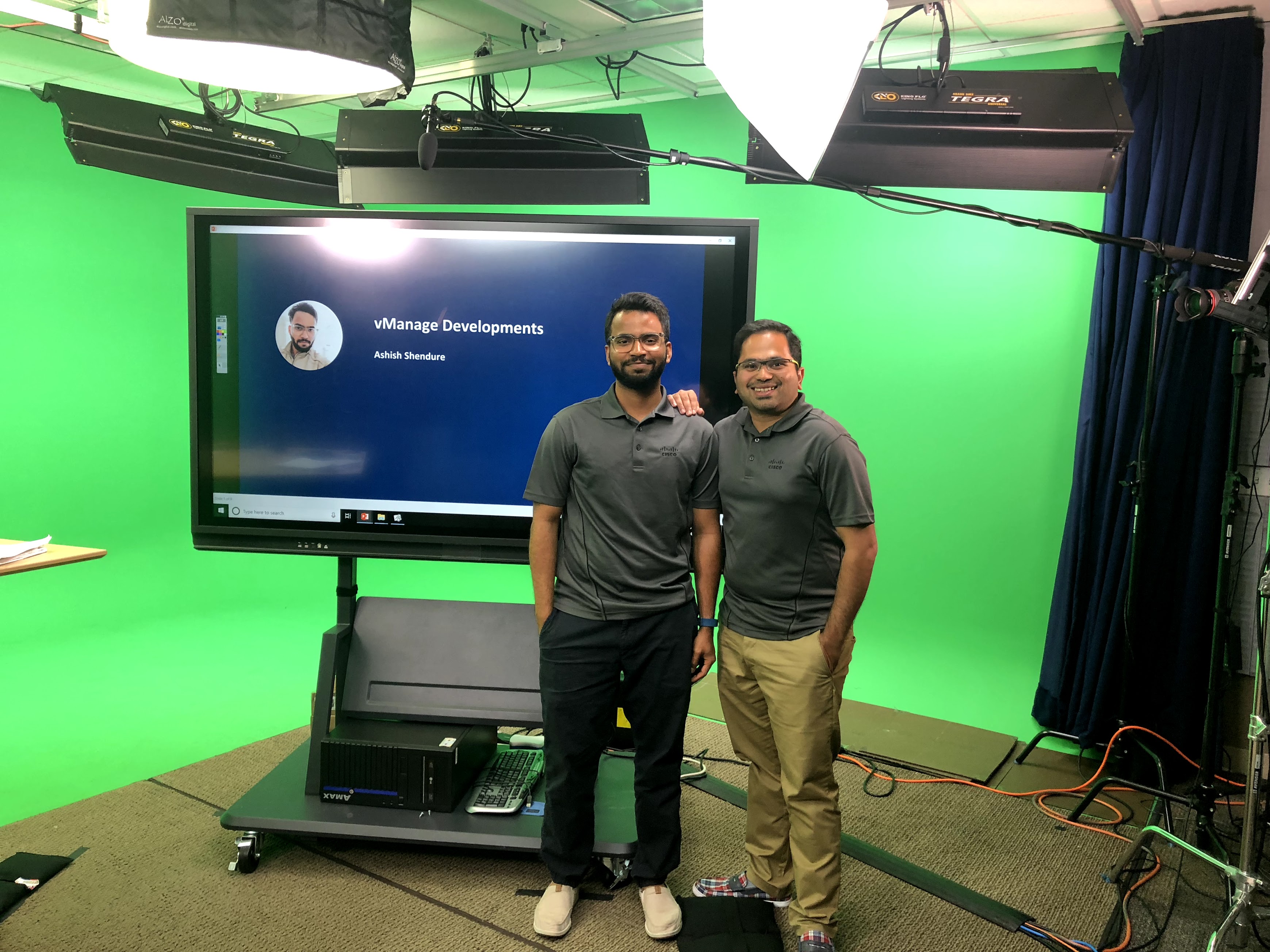
MY ROLEPresented Archie on Cisco Live TV. Co-authored the patent. Ran onboarding sessions with the SE organization.
Archie brought down network deployment time from 3-4 days to 40-50 minutes. The value was recognized from both a solution perspective and the easy-to-use interface across Cisco customers who ran the proof of concept.
3-4d → 40m
Deployment time
From days to under an hour
1
Granted US patent
US 11,228,500 B2 · granted Jan 2022
3x
Discovery throughput
Per SE, per quarter, post-rollout
TV
Cisco Live coverage
Featured in Cisco Media Room
Cisco Media Room · recording for Cisco Live TV
09 / REFLECTIONWhat it taught me
Abstraction is highly underrated in the networking industry.
With age-old traditional methods, enterprise users are accustomed to seeing complexity on a daily basis. We tried to break this norm with a fully running application to back our hypothesis.
01
Own identity, not a replacement
The biggest challenge was establishing that Archie was unique, having its own identity, not a replacement of the existing platform.
02
Intent is the real input
Let the user speak business, let the system speak infrastructure, and design the translator in between. Every AI project I've touched since is a dialect of this idea.
03
Speed forces clarity
Five weeks with no room for waste. The constraint was the gift. It forced us to cut everything that wasn't essential.